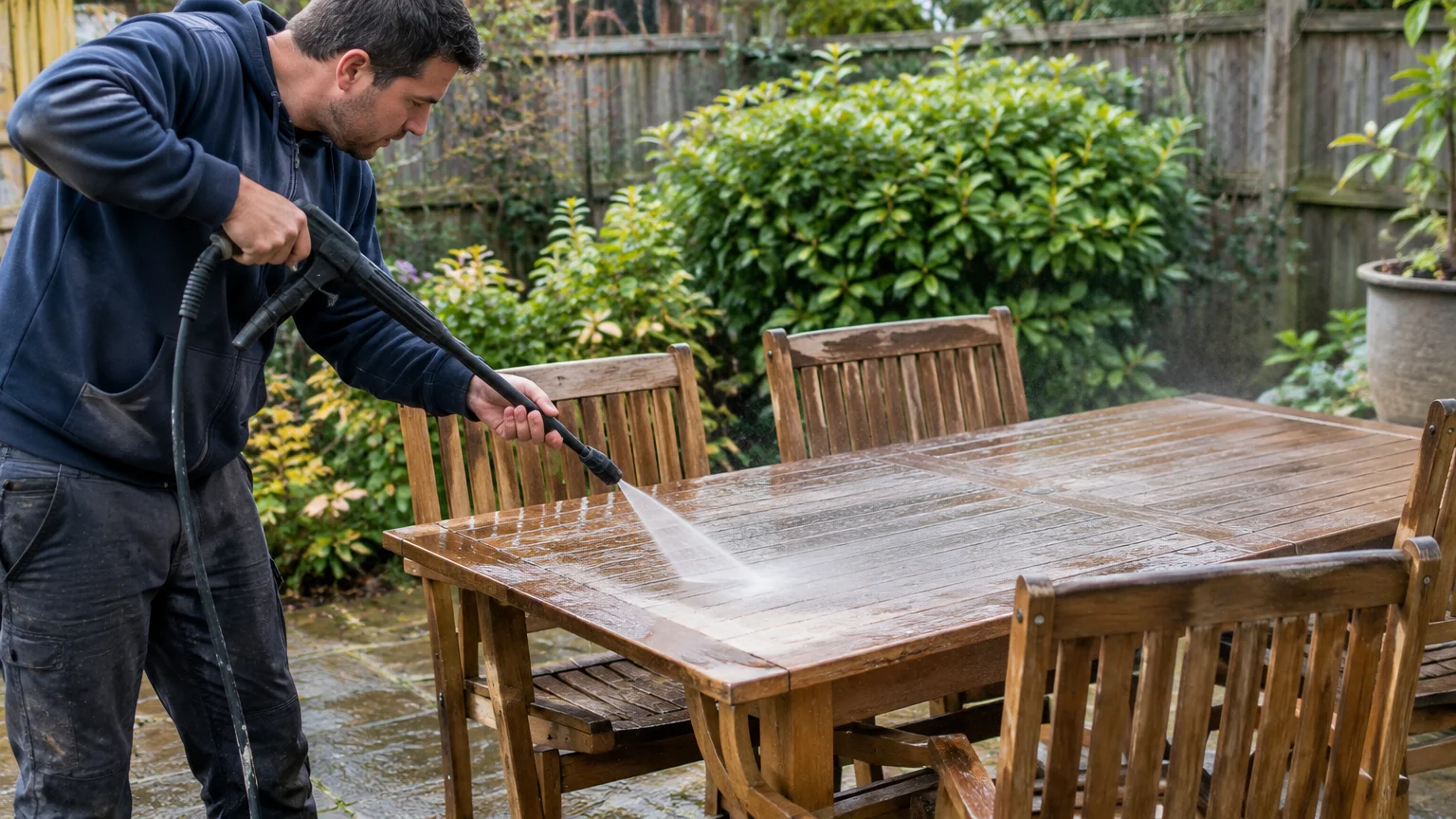
Power washing teak furniture can be safe when you use low force, a wide spray, and steady motion. Keep the nozzle away from the wood and test a hidden spot first. Mild soap, soft brushing, and full drying help remove dirt without cutting the grain or loosening the joints.
Teak furniture can stay outdoors for many years, but pollen, dirt, mildew, and old finish can make it look dull. The best cleaning method depends on the wood’s age, finish, and condition. This guide explains safe cleaning for homeowners and when help from Pressure Washing Sandy Springs may make sense.
Table of Contents
- Can you power wash teak furniture safely?
- What should you do before cleaning teak furniture?
- What pressure and nozzle should you use on teak?
- Which cleaning solution is best for outdoor teak furniture?
- How do you clean teak furniture without raising the grain?
- How should you restore and protect cleaned teak furniture?
- When should you hire a professional to clean outdoor furniture?
- Frequently Asked Questions
- Key Takeaways
- Conclusion
Can you power wash teak furniture safely?
Power washing teak furniture can be safe with a gentle setup and careful control. Teak is a hard wood, but its surface can still suffer damage from a sharp spray held too close. The goal is to lift surface dirt without cutting into the wood.
How teak responds to water pressure
Teak has natural oils that help it handle outdoor moisture. Still, pressure washing can remove more than dirt. It may also strip loose fibers, old coatings, and soft spots caused by weather or decay. Furniture that looks clean may feel fuzzy or rough after a strong wash.
Many teak pieces turn silver-gray as they age outside. This change is normal and does not always mean the wood needs oil. Green growth, black marks, and sticky grime need more care than normal gray weathering. A gentle wash can remove these marks while keeping the surface even.
When power washing may cause damage
Damage is more likely with a narrow nozzle, high force, or short spray distance. The water stream can leave lines that follow the spray path. It may also push water into loose joints, cracks, screw holes, and end grain.
Do not use a pressure washer on cracked, weak, peeling, or badly weathered teak without testing first. A soft brush and mild cleaner may be safer for fragile pieces. Pressure Washing Sandy Springs can help Sandy Springs homeowners choose a method that fits the furniture’s condition.
What should you do before cleaning teak furniture?
Inspect teak furniture before washing it, and remove anything that can hold water. A few minutes of planning can help prevent stains, loose parts, and damage near the work area. The furniture should be stable before water or cleaner touches it.
Inspecting the wood, joints, and finish
Look for cracked boards, loose screws, open joints, split legs, and soft wood. Press lightly with a clean fingernail to check for weak or crumbly spots. Any damaged area may need repair before washing.
The finish also matters. Paint, stain, oil, and sealer may react differently to water and cleaning products. Do not blast away peeling finish unless you plan to refinish the piece with care. Test a small area under the seat or on the back of a leg. This shows how the surface may react.
Removing cushions, hardware, and surface debris
Remove cushions, umbrellas, covers, trays, and other loose items. Take off hardware when possible, especially parts that can rust or hold dirt. Sweep away leaves, sand, and loose soil with a soft brush before adding water.
Protect nearby walls, plants, floors, and fabric. Move the furniture where dirty water can drain safely. If the piece sits on a wood deck, use extra care because deck boards can also mark under a strong stream. Deck Cleaning Services may help when the deck and furniture need cleaning together.
What pressure and nozzle should you use on teak?
A low-pressure, wide spray is usually safer for teak than a narrow stream. The right setting depends on the washer, nozzle, distance, and wood condition. Start with the least force that removes the soil.
Choosing a gentle cleaning setup
A wide fan nozzle spreads water across more of the surface. This lowers the chance of cutting a line into the wood. For light dust and pollen, a garden hose with a spray attachment may be enough.
Start a pressure washer at its lowest setting. Never test it first on the most visible part of the furniture. Test an underside or hidden corner, then check the area after it dries. If the wood looks fuzzy, striped, or lighter in one place, the spray is too strong or too close.
People may search for power wash pressure settings, Ryobi pressure washing tips, or pressure washing machine rental advice before starting. The brand matters less than control. Rental machines can be hard to manage because each one sends water with a different force.
Why distance and steady movement matter
Keep the nozzle well away from the wood and move it in smooth passes. Never stop the spray over one spot. Spraying with the grain may give a more even result, but it does not make high pressure safe.
A steady pace protects the surface better than short, repeated bursts. Rinse often and check the wood while it is damp. A pressure washing rental may seem helpful for one job, but a hose and soft brush may work better for delicate furniture.
Which cleaning solution is best for outdoor teak furniture?
A mild cleaner made for outdoor wood is a safe starting point for teak. The label should say that it works on wood and outdoor furniture. Strong chemicals can change the wood’s color, harm plants, or damage a protective finish.
Selecting a wood-safe cleaner
Choose a cleaner that lifts dirt, mildew, and pollen without hard scrubbing. Mix and use it as the label directs. More cleaner does not mean better cleaning. A soft nylon brush can work the solution into grooves and slats.
Test the cleaner on a hidden area first. Let that spot dry before you judge the result. Teak can look different while wet, so a quick look may not show a lasting color change.
For light cleaning, clean water and a soft brush may be enough. For mildew or dark marks, a wood-safe product may help. Keep the cleaner wet only as long as the label says. Then rinse it away fully.
Solutions and tools to avoid
Avoid wire brushes, metal scrapers, and rough sanding during a basic wash. These tools can scratch the surface and leave deep marks. Household bleach, strong degreasers, and unapproved acids can also change the wood’s color.
Never mix cleaning products. Mixing chemicals can create harmful fumes or unsafe reactions. Keep children and pets away until the area is rinsed and dry. A safe plan protects both the furniture and the people who use the outdoor space.
How do you clean teak furniture without raising the grain?
The safest method uses mild cleaner, a soft brush, low water force, and enough drying time. Work in small sections and never hold the spray in one place. This removes soil while lowering the chance of lifted fibers.
A careful step-by-step washing method
- Move the furniture to a safe work area and remove loose items.
- Dry-brush the surface to remove leaves, dust, and loose dirt.
- Wet one small section with a hose or gentle spray.
- Apply a wood-safe cleaner and let it work as directed.
- Brush with the grain using light pressure and short passes.
- Rinse from top to bottom with a wide, gentle spray.
- Check for missed soil and repeat only where needed.
The brush should do most of the cleaning. The washer should help rinse, not carve away dirt with force. This matters around edges, carved details, seat slats, and joints.
Rinsing and drying the wood properly
Rinse until no cleaner remains in seams or corners. Leftover soap can leave a dull film and draw more dirt. Turn the piece or open moving parts so trapped water can drain.
Let the furniture dry in a bright, well-aired place. Do not put cushions back on damp wood. The piece may need more than one day to dry. Shade, humidity, airflow, and wood thickness all affect drying time. Do not apply oil, stain, or sealer while the surface feels cool or damp.
How should you restore and protect cleaned teak furniture?
After cleaning, teak can weather on its own or receive a product made for outdoor wood. Neither choice is right for every piece. The best choice depends on the color you want, the old finish, and your future care plan.
Deciding between natural weathering and refinishing
Natural teak slowly changes from warm brown to soft gray outdoors. This is a normal surface change, not proof that the wood is failing. If you like the gray look, regular gentle cleaning and drying may be enough.
If you want a warmer color, you may choose teak oil, sealer, or stain. These products can change the care routine. Some need repeat applications. Others may darken uneven spots if the wood was not prepared well.
A clean, dry surface is the starting point for any finish. Old oil, flaking sealer, or uneven stain may need removal before a new product is used. Never apply finish just to hide loose fibers or structural damage.
Preparing teak for oil, sealer, or stain
Read the product label before applying anything. Follow its drying time, weather limits, and surface directions. Apply a small test coat first because teak can absorb products unevenly.
The furniture should be free of cleaner and fully dry. Apply thin, even coats with the right tool. Wipe away extra product when the label says to do so. Good airflow helps the finish dry. Keep cushions off the furniture until the surface is ready.
Professional help may also support nearby Outdoor Structures and Furniture. Pergolas, railings, awnings, outdoor kitchens, and decks may need different cleaning methods. Treating every material alike can cause avoidable damage.
When should you hire a professional to clean outdoor furniture?
A homeowner does not need a professional for light dust, routine rinsing, or mild cleaning when the furniture is sound. Professional help is useful when the wood is weak, the finish is failing, or several outdoor materials need care. The choice depends on risk, time, and the furniture’s condition.
Signs the furniture needs specialized care
Professional help may be wise when the furniture has:
- Deep cracks, loose joints, soft wood, or unstable legs.
- Heavy mildew or dark stains that mild cleaning does not remove.
- Peeling oil, stain, paint, or sealer across much of the surface.
- Delicate carvings, built-in parts, or hard-to-reach areas.
- Nearby decks, fences, walls, plants, or outdoor kitchens needing protection.
A skilled cleaner can inspect the surface, test a method, and adjust water force. They can also explain whether cleaning is enough or whether repair and refinishing should come first. This can help protect valuable furniture from a rushed wash.
How professional cleaning supports decks and outdoor living areas
Outdoor furniture often sits beside a deck, patio, fence, or pergola. Cleaning one item may show how much soil has collected across the whole space. A planned approach helps stop dirty water from splashing onto clean furniture.
Pressure Washing Sandy Springs offers local guidance for outdoor cleaning projects in the Sandy Springs area. The team can help property owners choose a safe method for teak, composite surfaces, railings, and other outdoor areas. Each material needs the right water force and cleaning method.
House washing and soft washing also use different methods from furniture cleaning. Soft washing uses low pressure with a cleaning solution for delicate outdoor surfaces. Pressure washing costs can vary based on the surface, access, size, soil, and needed care, so the final cost is confirmed on a quote.
Frequently Asked Questions
Can a pressure washer damage teak furniture?
Yes. A strong stream can cut the grain, leave stripes, remove soft fibers, and push water into joints. Damage is more likely when the nozzle is narrow or close to the surface. A wide spray, low setting, steady movement, and hidden-area test can lower the risk.
Is it better to use a hose or a pressure washer on teak?
A hose is often enough for dust, pollen, and light soil. A pressure washer may help with heavy buildup, but it needs careful control. If the teak is old, cracked, or rough, hand washing with a soft brush may be safer.
Should teak furniture be oiled after cleaning?
Not always. Teak can weather naturally to gray without oil. Owners who prefer a warmer color may use teak oil or another outdoor wood finish. The wood must be clean and fully dry first. Test the product in a hidden spot.
How often should outdoor teak furniture be cleaned?
There is no single schedule for every piece. Light cleaning when dirt appears can prevent heavy buildup. Furniture under trees, near pools, or in damp shade may need care more often. Routine checks are better than waiting for grime to harden.
Can a rental pressure washer clean teak safely?
It can, but rental machines vary in power and spray control. A first-time user may choose too much force without noticing. For valuable or fragile furniture, a hose and soft brush may be safer. A professional can also manage the cleaning with care.
Key Takeaways
- Teak can be washed safely when water force is low and the spray keeps moving.
- A wide fan spray and soft brush help reduce damage to the grain.
- Testing a hidden area can show whether the method is too harsh.
- Furniture must dry fully before oil, stain, or sealer is applied.
- Fragile, cracked, or heavily finished pieces may need professional care.
Conclusion
Power washing teak furniture is not about using the strongest machine. It is about using the least force that removes soil while protecting the wood. Careful checks, mild cleaner, gentle pressure, and full drying can help outdoor furniture last longer.
Pressure Washing Sandy Springs helps homeowners and property owners plan outdoor cleaning. Contact us to arrange careful service for teak furniture, decks, fences, and related outdoor areas.