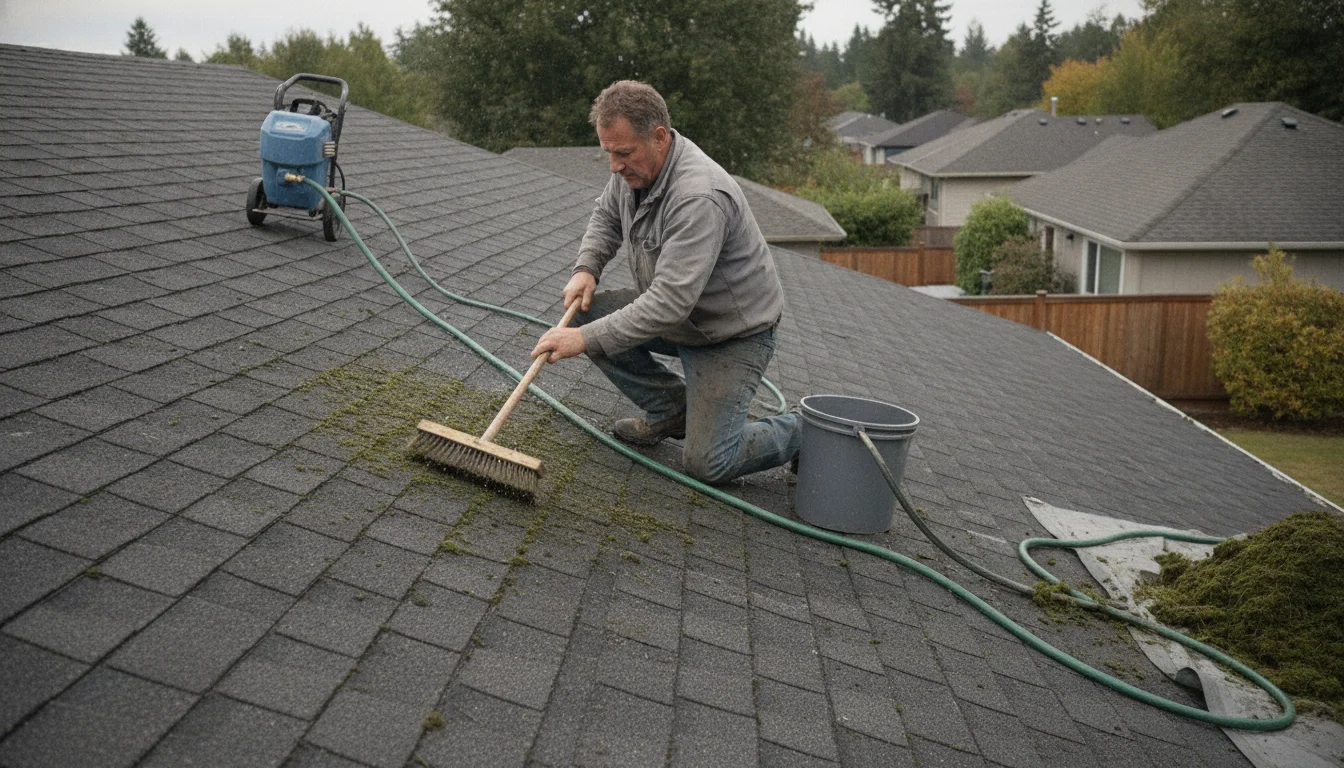
The green film creeping across siding, the dark streaks beneath gutters, and chalky patches on trim all signal that your exterior needs attention. Many people search for house washing near me and wonder if higher PSI is the fix. Soft washing is a safer approach: it uses low water pressure with targeted detergents to clear algae, mildew, and grime without harming finishes—an ideal option for homes in Sandy Springs.
What Is Soft Washing?
If you’re wondering what is soft washing, here’s a clear definition. Soft washing is a cleaning method that combines low pressure with specialized detergents to remove organic growth and soil without damaging the surface. Rather than relying on force, it lets chemistry and technique do the work, which is why it’s commonly recommended for siding, stucco, and painted exteriors. In this guide, you’ll learn what is soft washing, how it differs from pressure washing, and when it makes sense for your property in Sandy Springs.
1. Soft Washing vs. Pressure Washing: What’s the Difference?
Soft washing centers on low pressure plus detergents. The pump sprays water at roughly garden-hose strength while the cleaning solution loosens and breaks down algae, mildew, and general buildup. A surfactant (a soap that reduces surface tension) helps the solution cling to the surface so it can work effectively, even on textured materials.
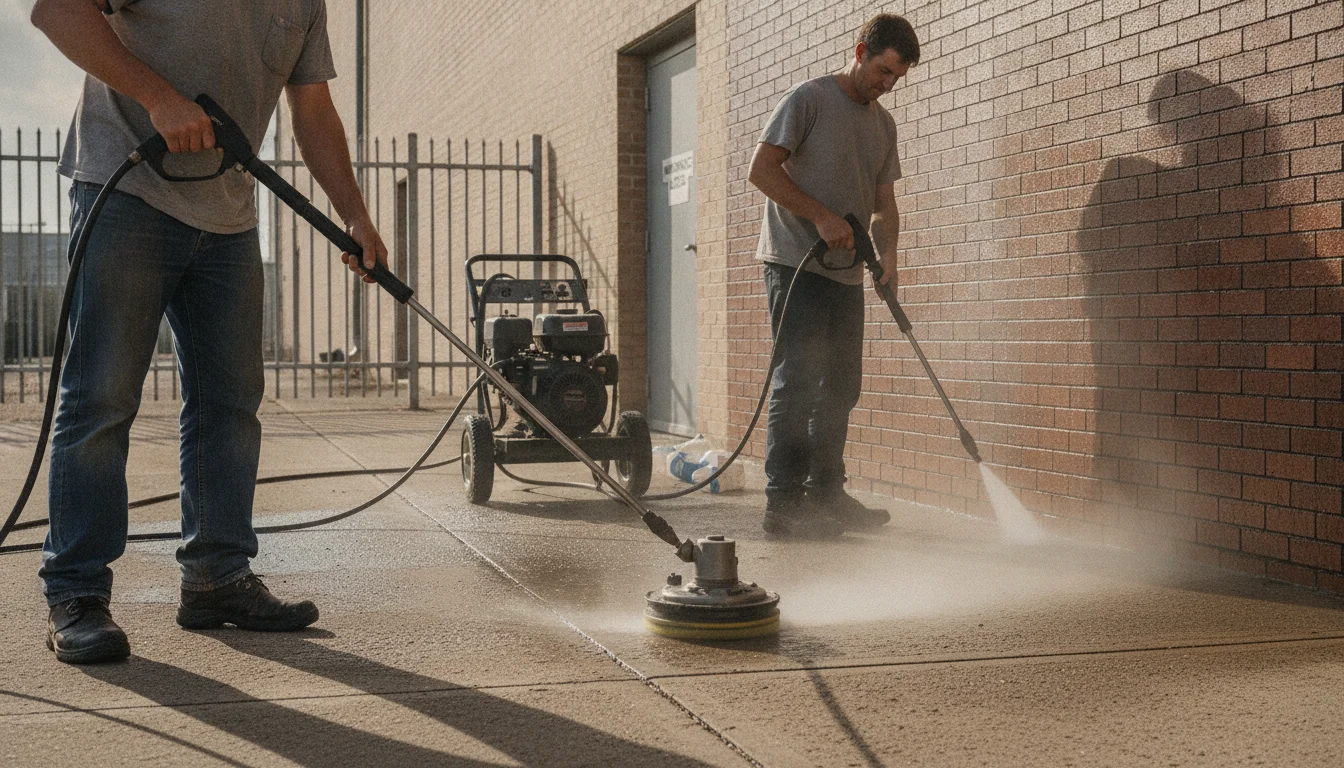
Pressure washing, by contrast, uses high pressure—often 1,500 to 3,000+ PSI—to mechanically push dirt off. That impact can be excellent on hardscapes like concrete, but it’s risky for many home exteriors. With soft washing, the solution typically dwells for several minutes before a gentle rinse, leaving the surface clean without scarring or gouging.
Organic contaminants such as algae and mildew are living films. Soft-wash detergents address the biofilm at its root, so growth doesn’t immediately return. Technicians often allow a 5–10 minute dwell time (without letting the solution dry) before completing a thorough low-pressure rinse.
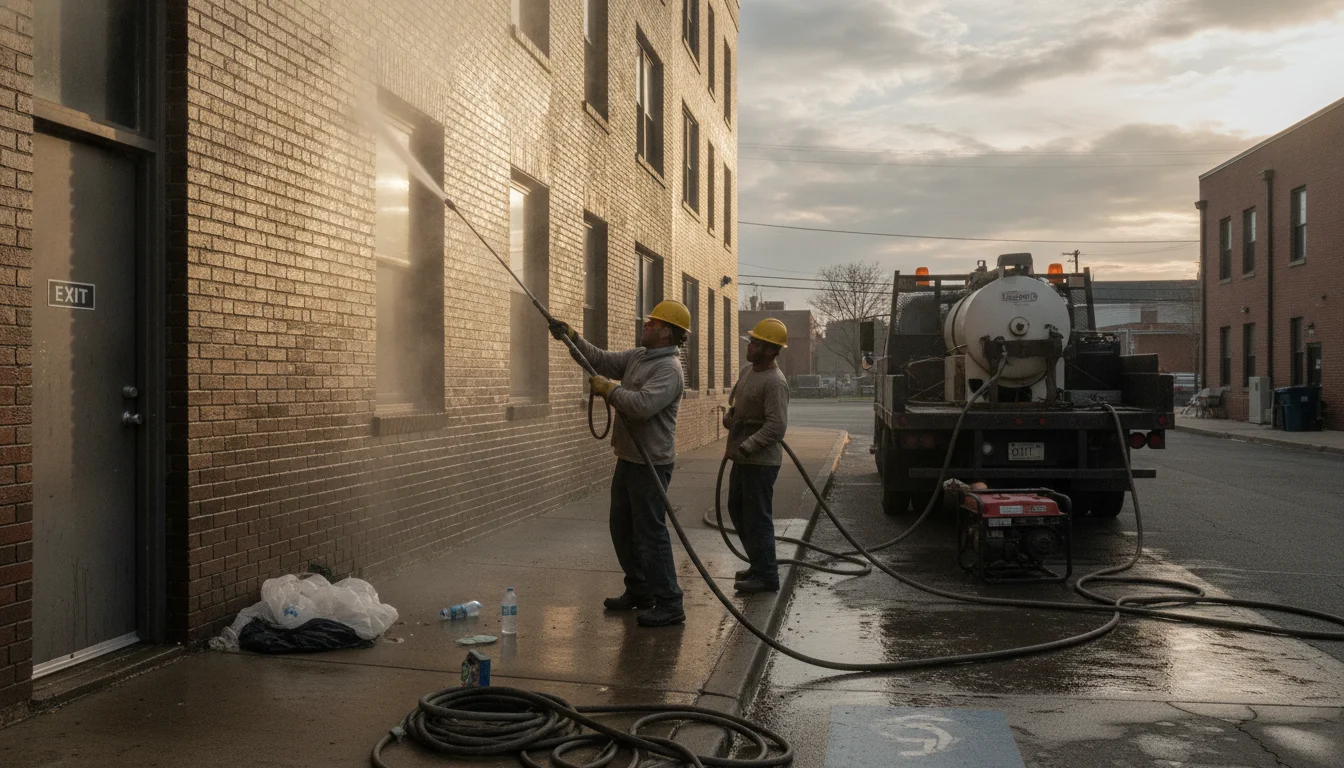
High pressure can damage siding, stucco, and brick. It may drive water behind vinyl laps, chip paint, scar EIFS or traditional stucco, and erode brick mortar. Soft washing avoids these risks by letting chemistry, not force, handle the cleaning.
If you’re comparing options, remember that pressure washing costs vary by building size, soil level, and surface type. Selecting the right method for each material can prevent damage and reduce repeat cleanings.
2. Why Soft Washing Is Safer for Siding, Stucco, and Paint
High PSI on fragile surfaces can cause etching (permanent scarring), worsen oxidation (the chalky, weathered layer on older coatings), and force water into seams, leading to water intrusion. These issues don’t just look bad—they shorten the service life of exterior materials and can create repair headaches.
Many manufacturers and paint warranties caution against high-pressure cleaning. They often recommend low-pressure methods with approved detergents to preserve finishes. Checking product data sheets for your siding or coating is a smart step before any wash.
Safer technique matters. Pros choose wide-angle tips (often 40° or more), keep the wand at a safe distance, and manage dwell times so detergents work without drying. They rinse thoroughly and evenly, which helps prevent streaks on oxidized or sun-aged surfaces.
3. Professional Soft Wash Process (Step-by-Step)
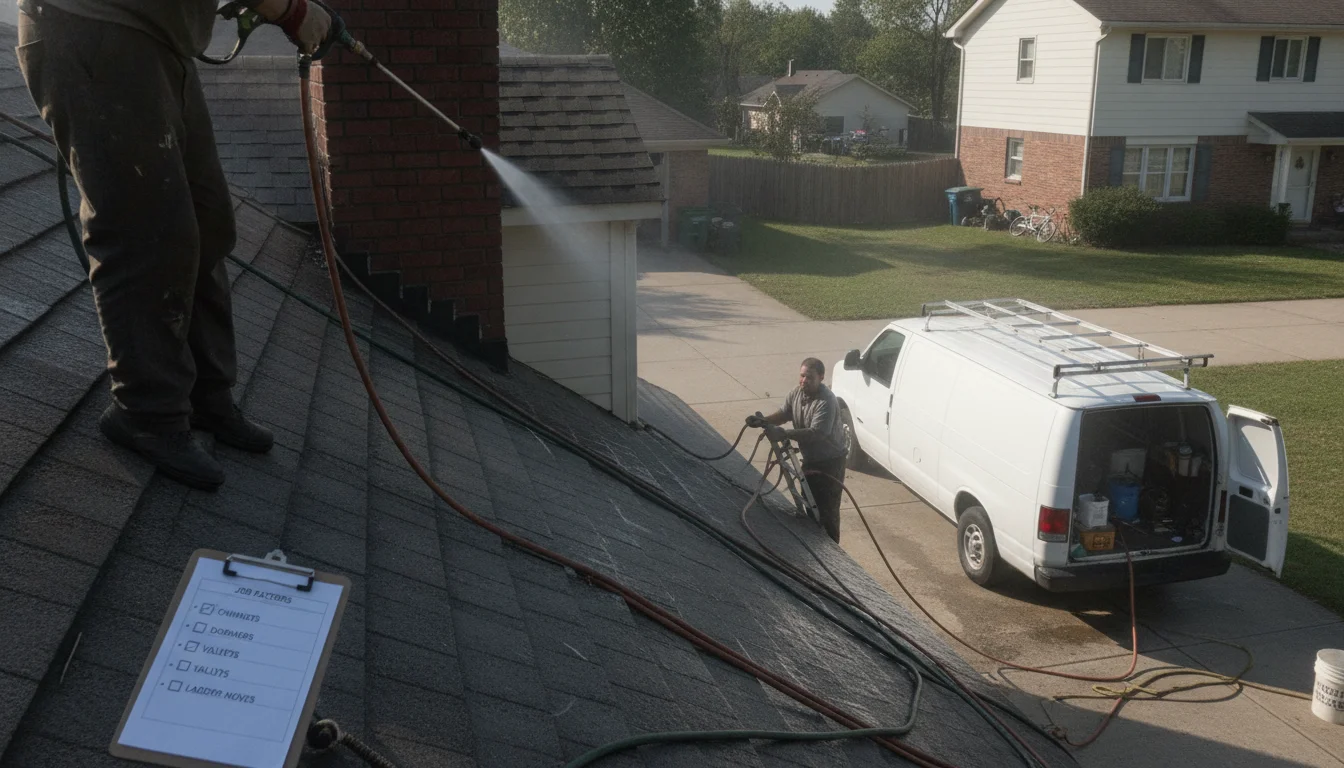
- Inspection and safety setup: Identify materials (vinyl, fiber cement, stucco, brick, painted wood), note oxidation, seal outlets, and plan safe ladder or lift use. Confirm weather and wind so overspray stays controlled.
- Protect landscaping: Pre-wet plants, cover delicate shrubs when needed, and redirect downspouts. Keeping foliage hydrated before, during, and after helps prevent leaf spotting.
- Mix and test: Prepare the cleaning solution per label directions. Many pros target gentle, siding-safe strengths and test a small, inconspicuous area to verify dwell time and results.
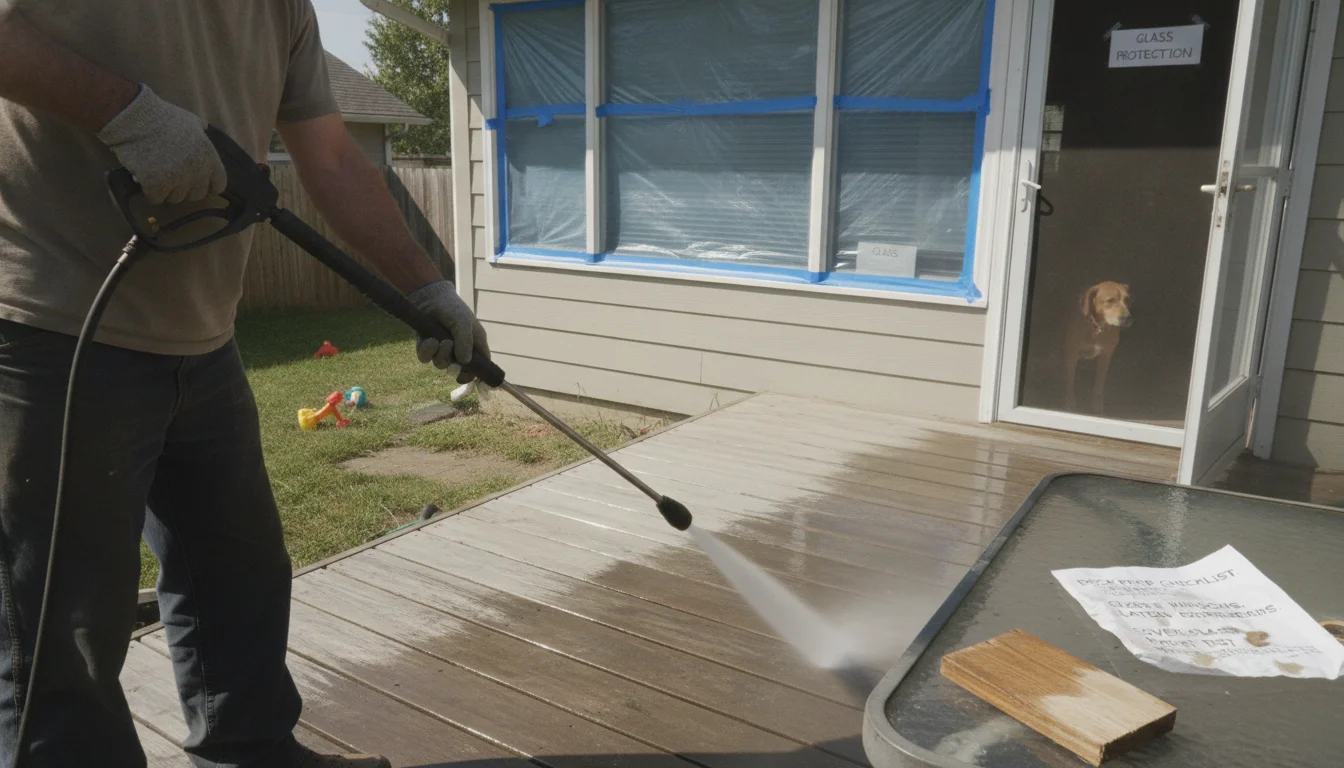
- Pre-rinse and isolate: Lightly rinse the surface to cool hot panels and remove loose dust. Isolate doors or areas where water should not intrude.
- Apply detergents (bottom-up): Work methodically from bottom to top to avoid streaks. Ensure even coverage so the chemistry contacts all growth.
- Allow dwell time: Let the solution sit 5–10 minutes, keeping it wet. Reapply lightly if sun or wind accelerates drying. Avoid letting detergent dry on glass or metal.
- Gentle agitation (as needed): Use a soft brush on stubborn spots like drip edges, textured stucco pits, and around vents.
- Low-pressure rinse (top-down): Rinse thoroughly from top to bottom with low pressure, clearing residues from seams, trims, and weep holes.
- Post-treatment and final check: Spot-treat persistent staining, rinse plants again, and perform a walk-through to confirm uniform results and tidy cleanup.
If you’re in Sandy Springs, Pressure Washing Sandy Springs follows a careful soft-wash checklist to help protect siding, seals, and landscaping while delivering a cleaner, brighter exterior. To learn more about our gentle approach, see our Soft Washing Services in Sandy Springs at /soft-washing or explore broader exterior options at /professional-pressure-washing-services.
4. Maintenance: How Often and Signs It’s Time
Most homes benefit from soft washing every 12–24 months, but local conditions in Sandy Springs and across Georgia can shorten or extend that schedule. Humid river air, dense shade, and nearby trees encourage faster organic growth. Heavy pollen seasons can also call for more frequent care.
Watch for visible cues: green or brown films on siding, black streaks under gutters and trim, musty odors near shaded walls, or slippery steps and patios. Addressing these early often means gentler solutions and less labor.
Between services, keep gutters clear, trim vegetation so walls can dry, fix irrigation overspray, and occasionally rinse shaded walls with a garden hose. Small habits help surfaces stay cleaner longer.
Frequently Asked Questions
Q: Is soft washing safe for plants and pets?
A: With correct dilution, plant pre-wetting, and thorough rinsing, soft washing can be performed safely. Pros shield sensitive landscaping, manage runoff, and keep pets indoors until surfaces are dry. Always follow product labels, avoid storm drains, and flush soil around plants with fresh water after cleaning.
Q: Can a homeowner soft wash, or should they hire a pro?
A: Homeowners can tackle small areas with proper PPE, ladders, and careful mixing, but the learning curve is real. Professionals use metered systems, know safe strengths for each surface, and manage risks like oxidation and water intrusion. If the job involves height or fragile finishes, consider hiring a pro.
Q: How long do results last?
A: Results typically last 12–18 months, depending on shade, humidity, tree cover, and nearby traffic or construction dust. Because soft washing targets the growth itself, clean results often outlast rinsing alone. Routine maintenance and better drainage can stretch the time between full house washes.
Conclusion
Soft washing offers a gentle, effective way to clean siding, stucco, brick, and paint by pairing low pressure with the right detergents. It reduces the risk of etching and water intrusion while addressing the roots of algae and mildew. If you want curb appeal without surface damage in Sandy Springs, it’s a smart, surface-safe approach.
Key takeaways
- Soft washing = low pressure + detergents that remove growth without scarring surfaces.
- High pressure risks include etching, oxidation streaks, and water intrusion behind siding.
- Pro process matters: protect plants, control dwell time, and rinse thoroughly.
- Typical cadence: every 12–24 months, adjusted for climate, shade, and vegetation.
- Local help: In Sandy Springs, Pressure Washing Sandy Springs can recommend the right plan for your home.
Ready to talk through options for your property in Sandy Springs? Contact us at +1 470 625 6439 or [email protected]. For quick scheduling or questions, visit /contact-us. Pressure Washing Sandy Springs in Sandy Springs can help with gentle soft washing for siding, stucco, brick, and painted trim. We also assist local businesses—see /commercial-pressure-washing—and you can learn about our team at /about-us.